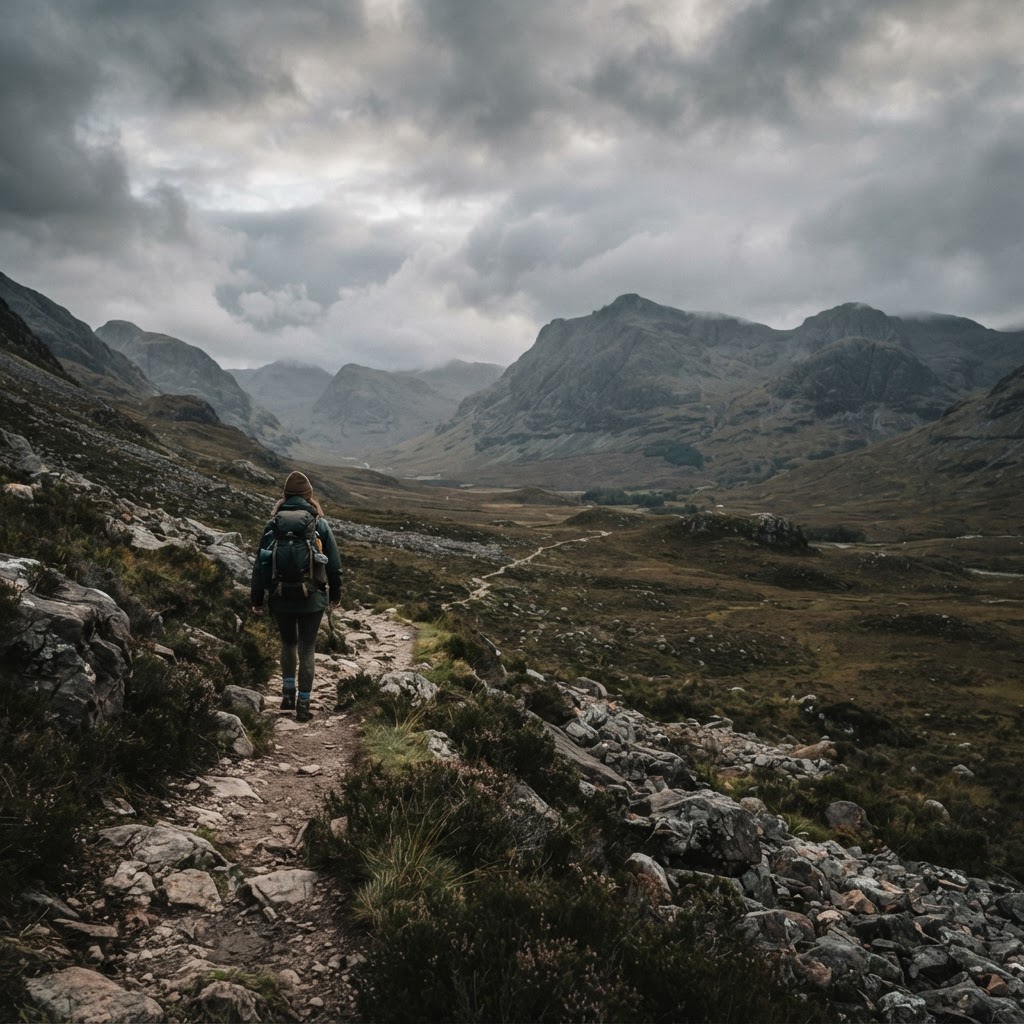
The Brutal, Beautiful Reality of Agency-Free Travel
If you want to truly experience the wild, you must strip away the middlemen. Here is why agency-free travel demands more, but delivers absolutely everything.
The wind in Patagonia doesn't care about your itinerary. It doesn't care how much you paid a luxury outfitter, or that your catered lunch is getting cold. It just howls. It strips the warmth from your bones and the arrogance from your mind. This is the exact moment most people retreat to the heated leather seats of a guided van. But if you stay out there, shivering and alive, you begin to understand the core of my philosophy. This is the brutal, beautiful reality of agency-free travel.
I founded Crossing Horizons because I watched the wilderness become a commodity. A packaged good, shrink-wrapped in safety protocols, liability waivers, and buffet breakfasts. We have traded the visceral punch of the unknown for the sterile comfort of the predictable. Agency-free travel is the antidote. It is the deliberate choice to remove the buffer between you and the earth.
Why Agency-Free Travel Strips Away the Illusion
When you hire a massive tour operator, you aren't buying an expedition. You are buying insulation. You are paying someone else to worry about the logistics, the weather, the permits, and the risk. But risk and discomfort are the very friction that makes an experience stick to your ribs. Without that friction, you are just a spectator in a very large, very beautiful museum.
Think about the Dolomites. You can hike the Alta Via 1 with a company that shuttles your bags and books your rifugios. You walk with a daypack. You arrive to a hot meal. It is pleasant. It is also entirely forgettable.
Now imagine carrying your own gear through a sudden limestone squall. Your shoulders ache. The map is damp. You have to navigate the scree field yourself, watching the fog roll over the jagged peaks, trusting your own compass bearing. When you finally push open the heavy wooden door of the rifugio, the warmth hits you like a physical blow. You earned that fire. You earned that bowl of polenta. The agency didn't buy it for you. Your own grit did.
The Core Mechanics of Agency-Free Travel
This isn't about being reckless. It is about taking ownership. Agency-free travel requires a meticulous, almost obsessive level of preparation. You must know the topography. You must understand the weather patterns. You must know how to fix a broken tent pole in the dark with freezing fingers.
Catch this moment live on InstagramAt Crossing Horizons, we don't hold your hand. We build the blueprint. We give you the maps, the local contacts, the gear lists, and the hard truths. Then, we step back. You are the one who has to walk the miles. We design the framework so you can experience the wild without the bloated infrastructure of a guided tour.
The Weight of Consequence
In the Kyrgyzstan Tian Shan, consequence is immediate. If you misjudge a river crossing, you are wet and cold. There is no support vehicle waiting around the bend with dry towels and a satellite phone. This immediacy forces you to be present. You cannot sleepwalk through a glacial valley. You have to watch the water level. You have to read the clouds. You become an active participant in your own survival, rather than a passive consumer of scenery.
This hyper-awareness is what we are actually chasing when we go into the wild. We want to feel awake. You cannot feel awake when someone else is making all the decisions.
The Ethics of the Unpackaged Expedition
There is a deeper layer to agency-free travel, and it is rooted in wilderness ethics. Large agencies require infrastructure. They need fleets of vehicles, massive basecamps, and rigid schedules. They leave a heavy footprint, both ecologically and culturally. They demand that the landscape accommodate them.
When you travel lean, you move like water. You slip into local economies directly. You hire the independent guide in Nepal instead of the multinational trekking conglomerate. You buy supplies from the corner market in Puerto Natales before heading into Torres del Paine. The money stays where it belongs—in the hands of the people who actually live at the edge of the wild.
Respecting the Silence
Catch this moment live on InstagramLarge groups shatter the silence of a place. A dozen people in matching jackets, following a flag, fundamentally alters the atmosphere of a mountain pass. When you strip away the agency, you usually strip away the crowd. You travel in twos or threes. You learn to shut up and listen.
I remember sitting on a ridge in the Alaska backcountry. No guide. No group. Just me, a map, and the immense, crushing scale of the Brooks Range. A grizzly moved through the brush a quarter-mile below. If I had been with a loud, guided tour, the bear would have vanished long before I saw it. Because I was quiet, because I was small, the wilderness revealed itself.
How to Transition to Agency-Free Travel
You don't start by dropping yourself into the middle of Borneo with a machete. You build the muscle. You learn the systems.
Start small. Go to Door County, Wisconsin in the dead of winter. Book a remote cabin. Plan your own routes through the snow-choked state parks. Learn how to manage your body temperature. Learn how to read a map when your phone dies from the cold.
Then, scale up. Tackle the F-roads of the Iceland highlands. Rent the 4x4. Study the river crossing techniques. Make the call on whether the water is too high or if you can push through. Feel the weight of that decision. Stand on the edge of a black sand expanse and know that you got yourself there.
Eventually, you will find that the idea of a packaged tour feels suffocating. You will crave the raw, unfiltered edge of the world. You will want the mud, the rain, and the silence.
The wild is not a theme park. It is not there to serve you, to entertain you, or to make you comfortable. It is indifferent to your existence. That indifference is its greatest gift.
When you embrace agency-free travel, you accept the wilderness on its own terms. You stop asking the landscape to adapt to you, and you begin the hard, beautiful work of adapting to it. Pack light. Study the maps. Leave the middlemen behind. The real expedition begins when the safety net ends.
The journey continues, in real time.
Field moments, dispatches, and behind-the-ridge glimpses land on Instagram first — then circle back here as the full stories.